Engineering
How Rehearsals Raised Call Completion from 35% to 90% with Phonic
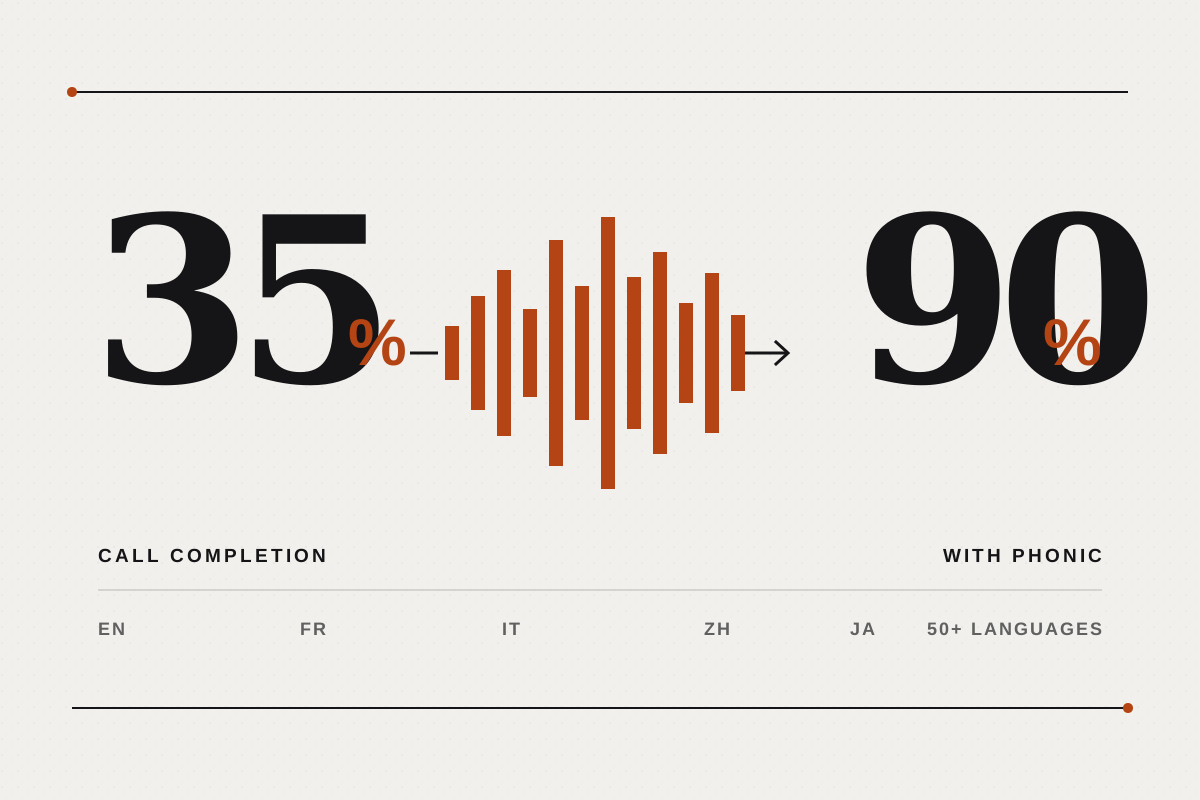
Rehearsals moved its participant interviews to Phonic and raised call completion from 35% to 90%, nearly eliminated key-term mispronunciations, and expanded multilingual reach.

Every Rehearsals twin begins with a real person telling us how they think. Those recorded interviews are the raw material for the twin, so the quality of the conversation directly affects the depth of the model we can build.
Phonic has published a new case study on what happened when we made that conversation feel more natural: more people finished, their answers became richer, and our team spent less time maintaining the voice stack behind the experience.
Read the full Rehearsals case study at Phonic
The interview is part of the model
A participant who feels interrupted, misheard, or rushed gives shorter answers. A participant who feels listened to takes the time to explain the emotion and reasoning behind a decision. That difference becomes part of the dataset behind their twin.
Before Phonic, our engineers were continually tuning pronunciation, tool calls, and latency across an assembled voice stack. The system could interrupt people mid-answer or sit silently through a long response. We could see the cost in both the participant experience and the interviews they completed.
From integration to impact in hours
The initial migration took hours. Phonic brought more patient turn-taking, natural backchannels, and substantially better pronunciation. A small A/B test quickly showed longer calls and answers with more depth and nuance.
All of a sudden, the question changed from: do we adopt Phonic, to how can we adopt this as quickly as possible.
Liam Bolling, CEO and Co-Founder of Rehearsals
The collaboration went beyond the API. Phonic reviewed live calls with us, suggested improvements to our supervisor agent, and shipped push-to-talk support by the end of the day when our team asked for it.
What changed
- Call completion rose from 35% to 90%, a 2.5x increase.
- Key-term mispronunciations fell from roughly one in four calls to virtually zero.
- We freed 15% of engineering bandwidth previously spent maintaining the voice stack and solving edge cases.
- Natural multilingual support expanded our addressable market by 4x.
One interview experience, across markets
Our customers need to understand people well beyond English-speaking markets. With Phonic, moving into Mandarin, French, Italian, Japanese, and other languages no longer means rebuilding the voice experience for every country. That lets us grow the panel across Europe and Asia while keeping the conversation natural for the person on the other side.
The best infrastructure disappears into the experience. Participants should feel heard. Researchers should get richer source material. And our engineers should be able to focus on making the twins more accurate. Phonic helped us move all three forward at once.