Company
Rehearsals on Bessemer’s Behavioral Simulation Map
Bessemer Venture Partners maps an emerging category around two ways to build simulated populations. Rehearsals sits at the real-human-grounded edge.

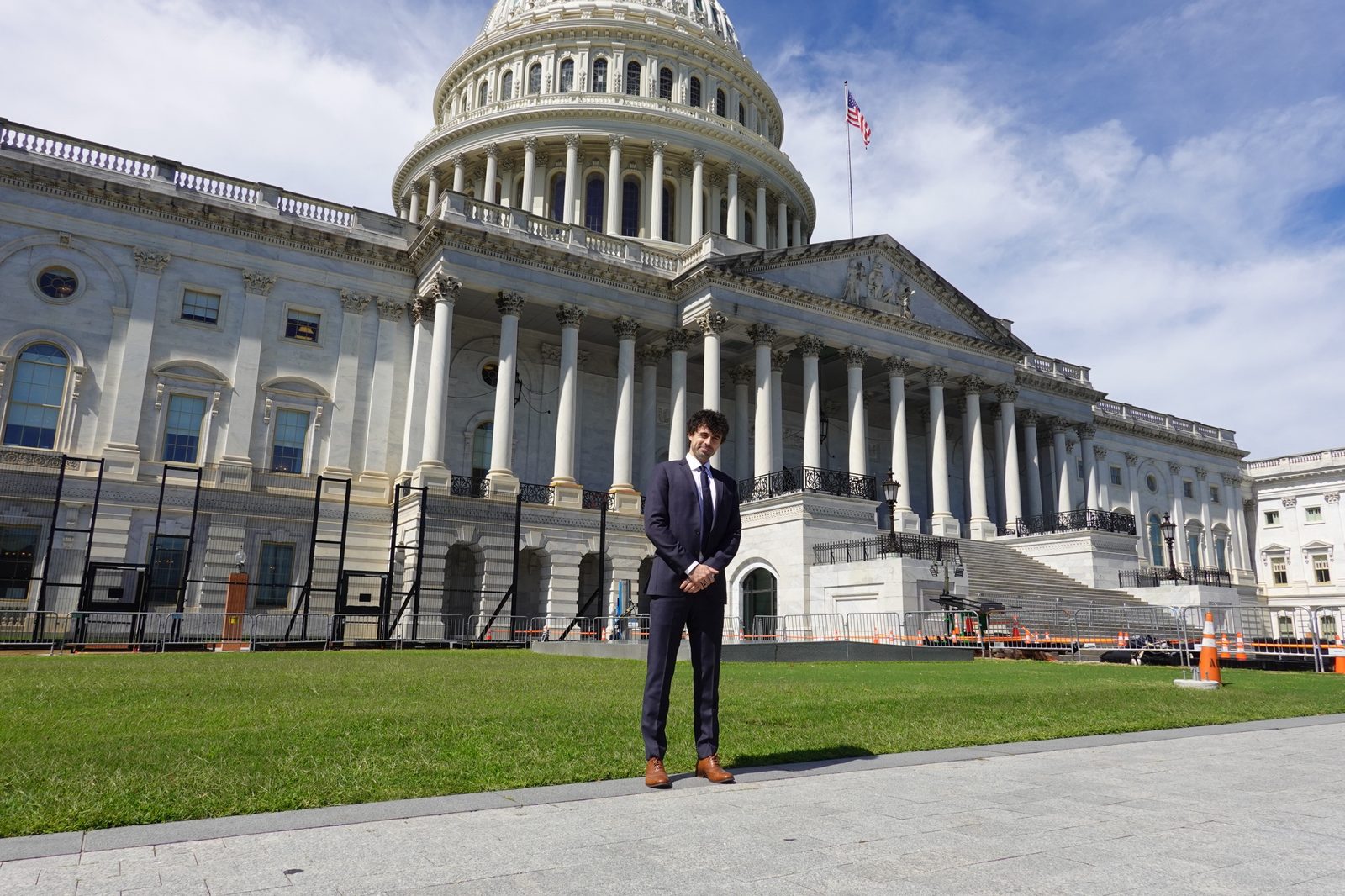
Andrew Ren at Bessemer Venture Partners has spent the past year talking with founders building AI-driven simulation for enterprise decisions. This week he shared Bessemer’s new view of the category, and we were glad to see Rehearsals on the map.
Read Andrew Ren’s post on LinkedIn
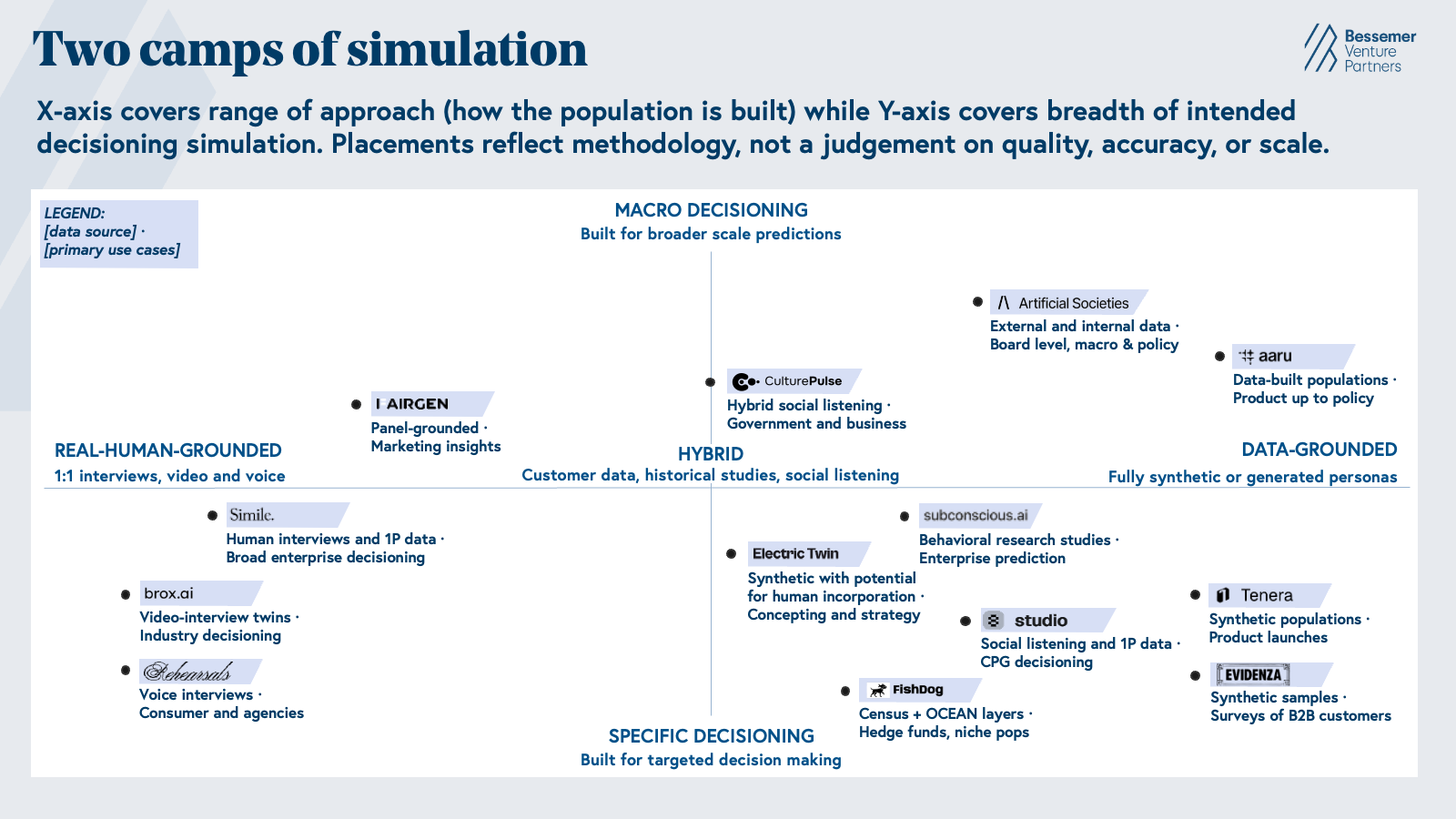
The map is useful because it does not flatten every simulation company into the same idea. It plots how a synthetic population is built, from real-human-grounded to data-grounded, against the breadth of decisions the product is designed to support. Bessemer is explicit that the placements describe methodology, not quality, accuracy, or scale.
Two camps, two starting beliefs
On the real-human-grounded side, Rehearsals appears alongside companies including Simile and brox.ai. These approaches begin with actual people and preserve an individual to calibrate against. On the data-grounded side, companies such as Aaru and Artificial Societies assemble populations from census data, behavioral traces, social listening, or generated personas. Hybrid approaches sit between them.
That distinction matters. A generated population can be useful for broad modeling, but a named human gives you something much harder to manufacture: a ground truth. You can ask whether the simulation responds like the person it represents, and you can go back to that person to test the answer.
Why Rehearsals starts with a real person
Every Rehearsals twin begins with someone from our own first-party panel. We recruit the participant, record their video and voice interviews, verify the interview, and keep the relationship current. The twin is built from that person’s reasoning and lived context, then enriched with the information that helps it respond to a real decision.
That is the foundation for our 92% fidelity to what the real humans would say or do. It also lets us run the accuracy backtest that matters most: twins answer a customer’s questions, their humans answer the same questions, and the customer sees the comparison side by side.
The category is getting clearer
Bessemer’s broader argument is that the lasting advantages in this market will come from proprietary first-party data, products embedded in real decision workflows, and trust earned through rigorous validation. That is also how we have chosen to build Rehearsals: own the panel, prove the twins against their humans, and make simulation a normal step before a launch, pricing change, campaign, or product decision.
Thank you to Andrew for spending real time with this category and for sharing the work, and to Elliott Robinson and Caty Rea for building the perspective with him. The field is early. The standards it chooses now will determine whether behavioral simulation becomes another source of interesting output or a system enterprises can trust with meaningful decisions.