Company
Little Tech Goes to Washington
Rehearsals joined the American Innovators Network on Capitol Hill for seven conversations about competition, open-weight models, and a national framework that gives startups room to build.

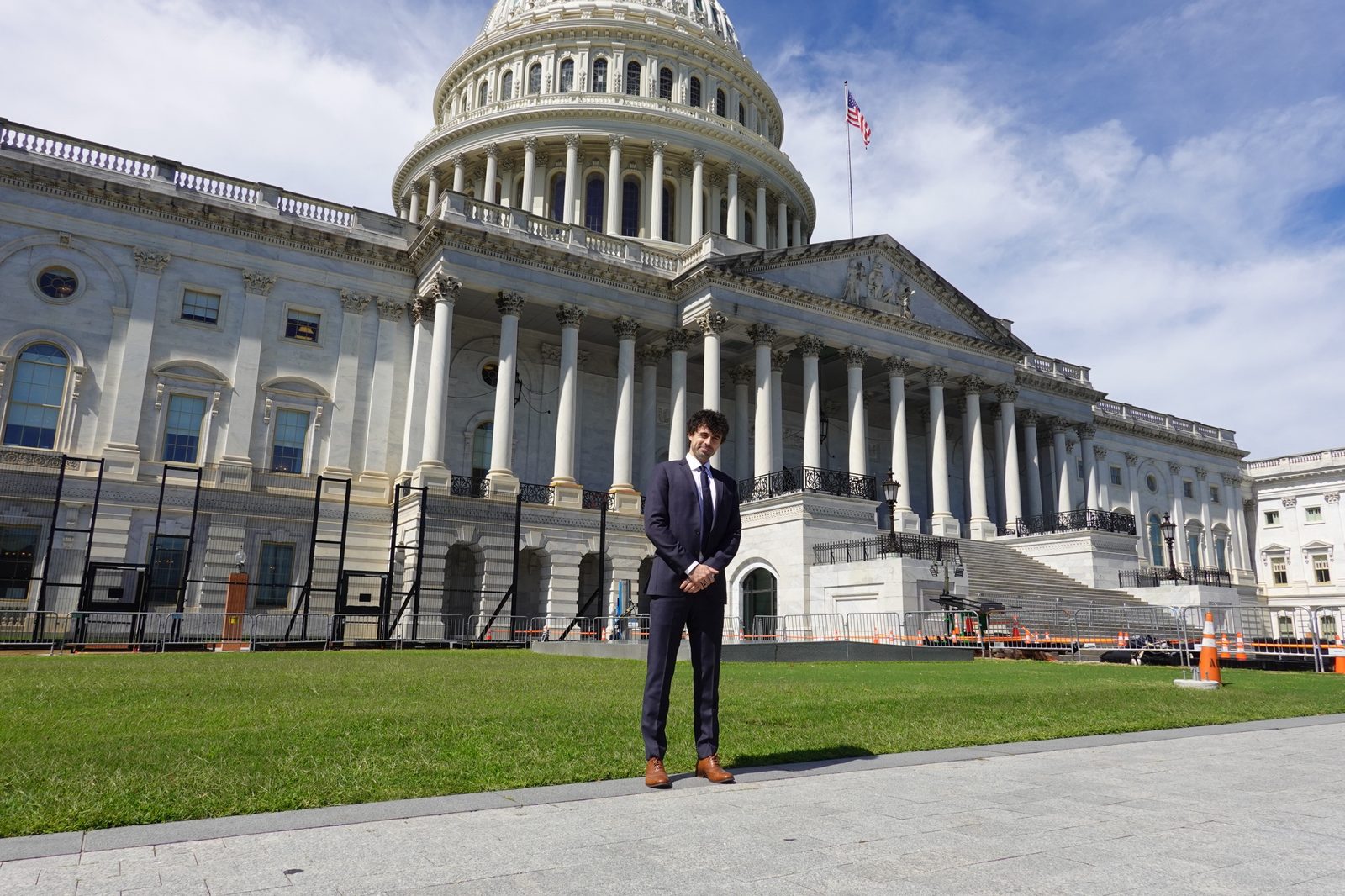
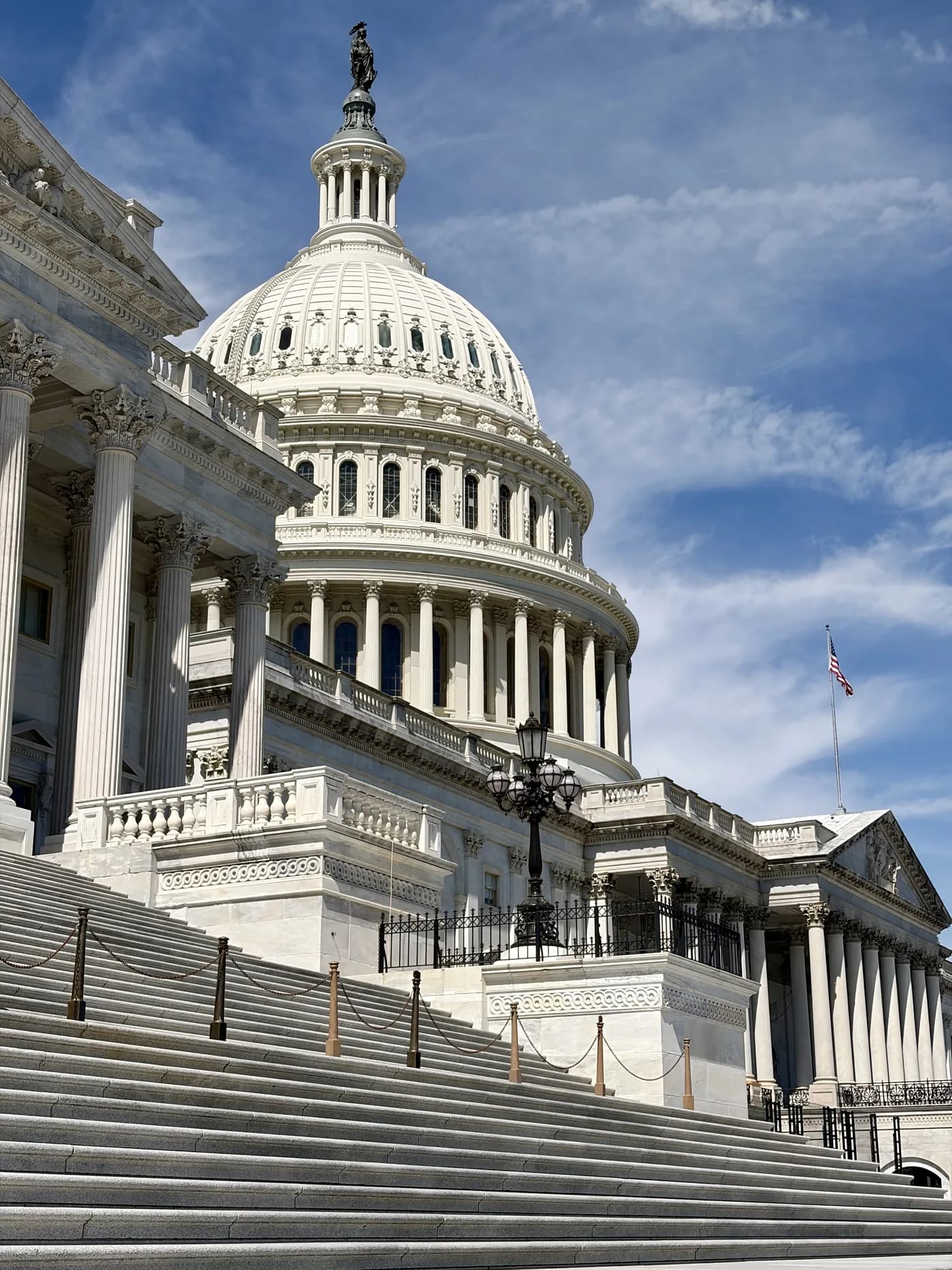
I spent Tuesday on Capitol Hill with the American Innovators Network and a group of AI founders and operators. We moved through seven meetings across the House and Senate, then ended the Hill portion of the day at the launch of the bipartisan House Innovators Caucus.
Days like this can collapse into slogans. Ours did not. The conversations kept returning to three practical questions: who gets to compete, whether American builders can keep access to open-weight models, and what it will take for the United States to lead the next generation of AI.
Who we met
We were Group 1: Slingshot AI, Mirage, Scale AI, Exia Labs, and Rehearsals. The five companies work across mental health, video, reliable AI systems, autonomous systems, and consumer simulation. That range made every policy question more concrete.
- Sen. Cory Booker’s office, with Ian Gray.
- Rep. Marilyn Strickland directly, the one meeting of the day with a member of Congress.
- Rep. Kevin Mullin’s office, with Kate Kenworthy.
- Senate Democratic Leader Chuck Schumer’s office, with Jon Cardinal.
- House Democratic Leader Hakeem Jeffries’s office, with Alex Scheuer.
- Rep. Ro Khanna’s office, with members of his technology team.
- Rep. Lori Trahan’s office, with Dylan Irlbeck.
Six of those seven conversations were with staff. That is not a footnote. Staff read the text, work through the tradeoffs, and carry an issue long after a meeting ends. They pushed us on where national rules should sit, what open models change in practice, and how policy choices land differently on a startup than on a company with a large legal team.
Representative Strickland gave us her own time. Her questions brought the conversation back to the founder level: the people companies hire, the markets they can reach, and whether the next generation of builders has a real chance to grow.
Little Tech is competition policy
AI policy is often presented as a choice between innovation and safety. From a startup’s perspective, that misses the market structure underneath the debate. The question is whether the next decade of AI is built by a few incumbent platforms or by thousands of companies competing to solve different problems.
Compliance cost is not neutral. The same requirement that becomes a line item for a large company can become a product roadmap for a small one. A patchwork of state rules compounds that fixed cost and makes it harder for a young company to serve customers across the country.
Our message was straightforward: Congress should pursue a clear national framework that protects people and preserves room for new entrants. Good rules should raise trust without quietly turning legal capacity into the price of admission.
Open weights keep the frontier contestable
In July, NVIDIA CEO Jensen Huang used his first post on X to share “Open Weights and American AI Leadership,” a coalition letter urging policymakers to protect the open-model ecosystem. Rehearsals signed it alongside organizations including NVIDIA, Microsoft, Meta, IBM, Hugging Face, Andreessen Horowitz, Y Combinator, and the American Innovators Network.
Open-weight and open-source are not interchangeable terms. Open weights let developers download a model’s learned parameters, adapt them, and run them outside a single vendor’s API. The training data and full source code may still remain closed. Even with that distinction, access to weights gives startups more control over cost, deployment, privacy, and product differentiation.
That is why open weights matter to Little Tech. A startup should be able to begin with a strong model, build a differentiated product on top of it, and choose the infrastructure that fits the use case. Without that option, the market narrows to companies that can train frontier models and everyone else rents the core of their product from them.
The China question
Competition with China surfaced repeatedly. The concern behind potential restrictions on downloadable models is real, especially as policymakers weigh national security and frontier capability. But limiting American open models does not eliminate global demand for them.
It can instead change whose models and technical ecosystems developers around the world adopt. Preserving a credible American open-model ecosystem is therefore part of competitiveness policy. That is not an argument against safeguards. It is an argument for targeted, technically grounded rules that address misuse without conceding the open layer of AI to competitors abroad.
The companies behind the policy
AIN’s broader delegation brought Rehearsals together with Ambient.ai, Mirage, Slingshot AI, Camber, Scale AI, Exia Labs, EdgeRunner AI, and Telnyx. The companies span physical security, creative video, mental health, cloud and communications infrastructure, defense, reliable AI systems, and consumer simulation.
That variety is the point. A rule written around one kind of model or one kind of company can land very differently across the rest of the market. Policymakers need to hear from teams building in the application layer, at the edge, in the cloud, and in regulated industries, not only from the handful of labs training the largest models.
A caucus for the companies still building their voice
The Hill portion of the day closed with the launch of the bipartisan House Innovators Caucus, co-chaired by Representatives Russell Fry and Suhas Subramanyam. Its purpose is simple and overdue: give small and medium-sized AI companies a durable channel into Congress while the rules of the market are still being formed.
A day on the Hill is a real cost for a small team. It was worth it because the offices shaping AI policy hear from large companies constantly and from companies our size far less often. Showing up once does not solve that imbalance, but it turns an abstract category into founders and operators Congress can call when a proposal needs a reality check.
Thank you
Thank you to the American Innovators Network and Vanessa Day for bringing the delegation together; to Zach Kahn and Matthew La Violette at Orrick and the Franklin Square Group team for guiding us through the day; and to every congressional office that gave us time and asked direct questions.
Thank you as well to a16z for helping turn the Little Tech agenda into a working coalition, not just a phrase. Giving startups a seat at the table is how competition stays real before today’s small companies have the scale to maintain a permanent presence in Washington.
And thank you to the founders and operators who made the same case from completely different parts of the stack. The best argument for Little Tech is the companies themselves: specific teams solving specific problems, competing to build something better.
Finally, thank you to Representatives Fry and Subramanyam for launching the Innovators Caucus. A bipartisan forum built for the companies not yet large enough to keep a Washington office is exactly the right idea.
We will be back.
Sources
- Open Weights and American AI Leadership
- NVIDIA’s Jensen Huang shares the open-weights letter
- American Innovators Network: Little Tech on Capitol Hill
- American Innovators Network: Launch of the Innovators Caucus
- American Innovators Network partners
- Axios: House members launch new bipartisan AI caucus
- Punchbowl News: Fry and Subramanyam launch little-AI caucus