
What is the Edit function?
Once you run your Rehearsal, you can edit the report to best fit your needs. Edit mode allows you to make both structural and stylistic changes to the report. Edits are a queue of comments, as if you were to comment on a Google Doc, and an agent will rewrite the report based on your feedback.Editing changes how the report reads, not what the interviews found. The rewriter works from the same interviews and the same data. If you need different findings, you need a new Rehearsal.
What can you edit?
You can edit
- Any text in the Overview
- Any text in the Appendix
- Charts — click one to leave a note on it
- Tables — click one to leave a note on it
You can't edit
- Verification — carried over unchanged
- Population - linked to the simulation cohorts
- Interview transcripts — the raw record of what replicas said
- The underlying findings — the numbers come from the interviews
Editing is available to admins and members of the organization that owns the report. People viewing a shared link can read the report but can’t edit it.
How to edit a report, step by step
1
Open the report and press Edit
The Edit button lives in the upper right hand corner of the report, next to Share.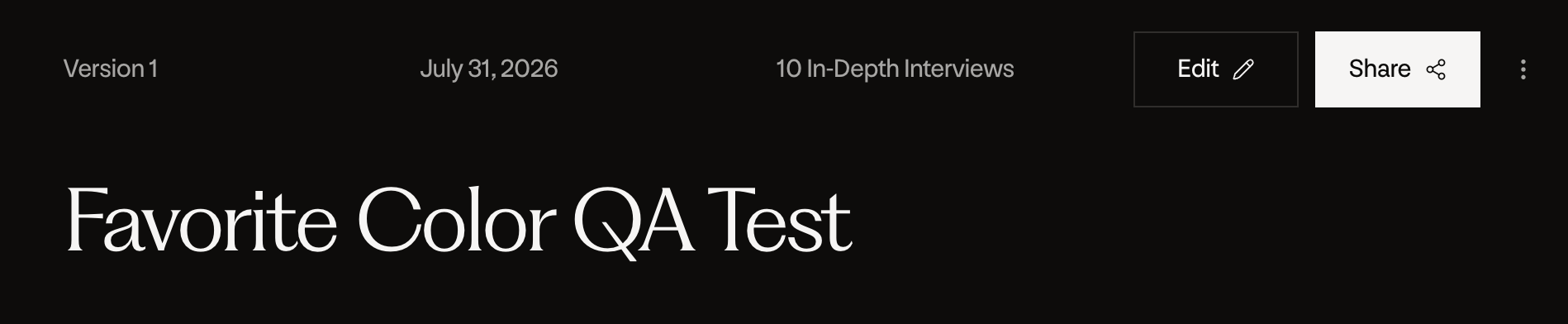
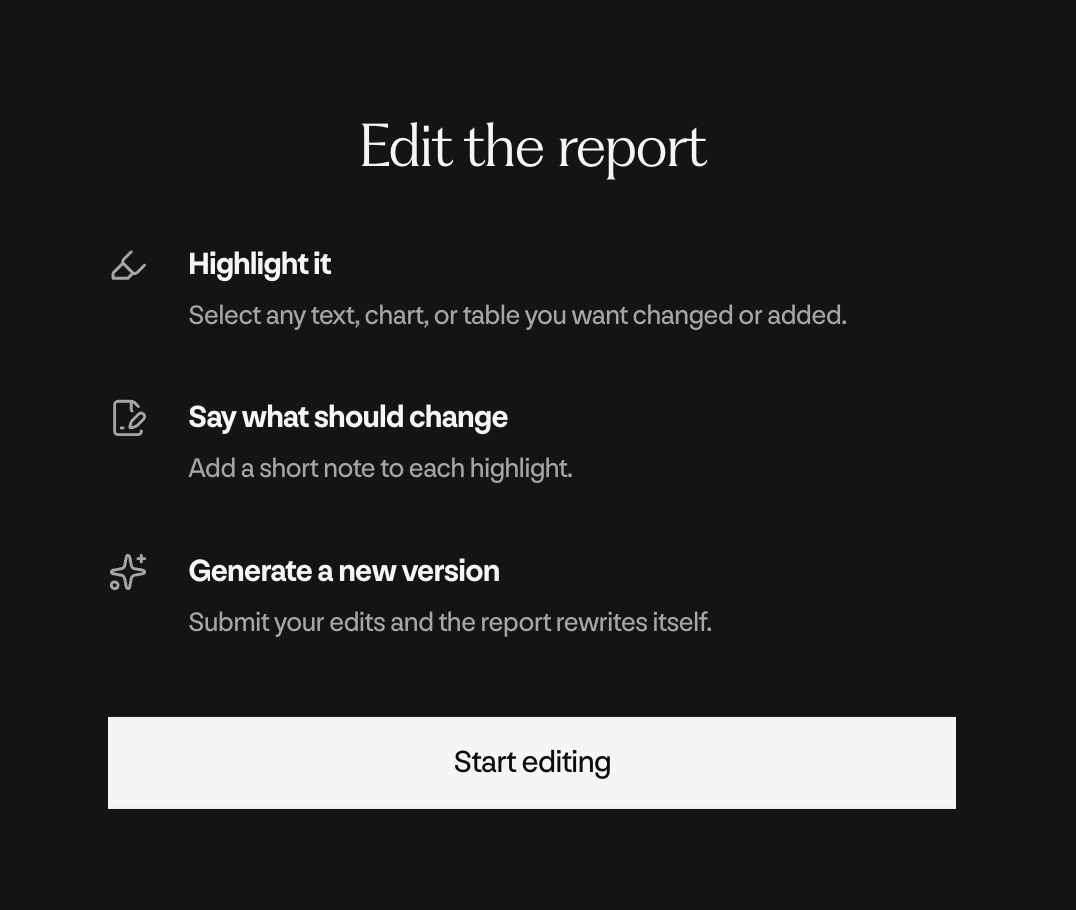
2
Highlight what should change
Drag to select any passage of text, or click a chart or a table. Headings and pull quotes work too.Highlighted passages turn coral, and charts and tables show an outline when you hover over them.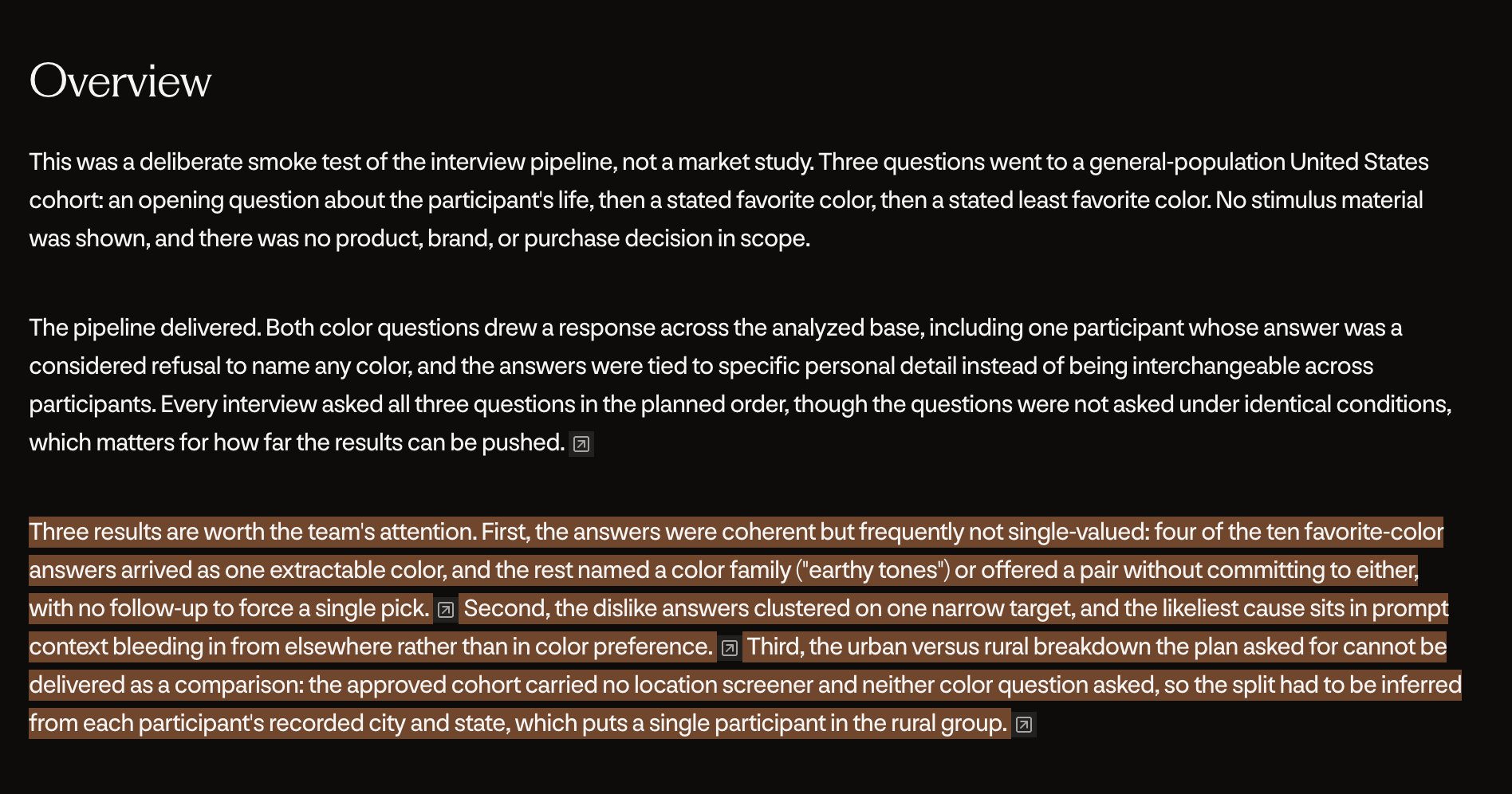
3
Say what should change
Your edit queue lives on the righthand side of the report. Like commenting on a highlighted section of the report, describe the change that you want, then press Queue edit.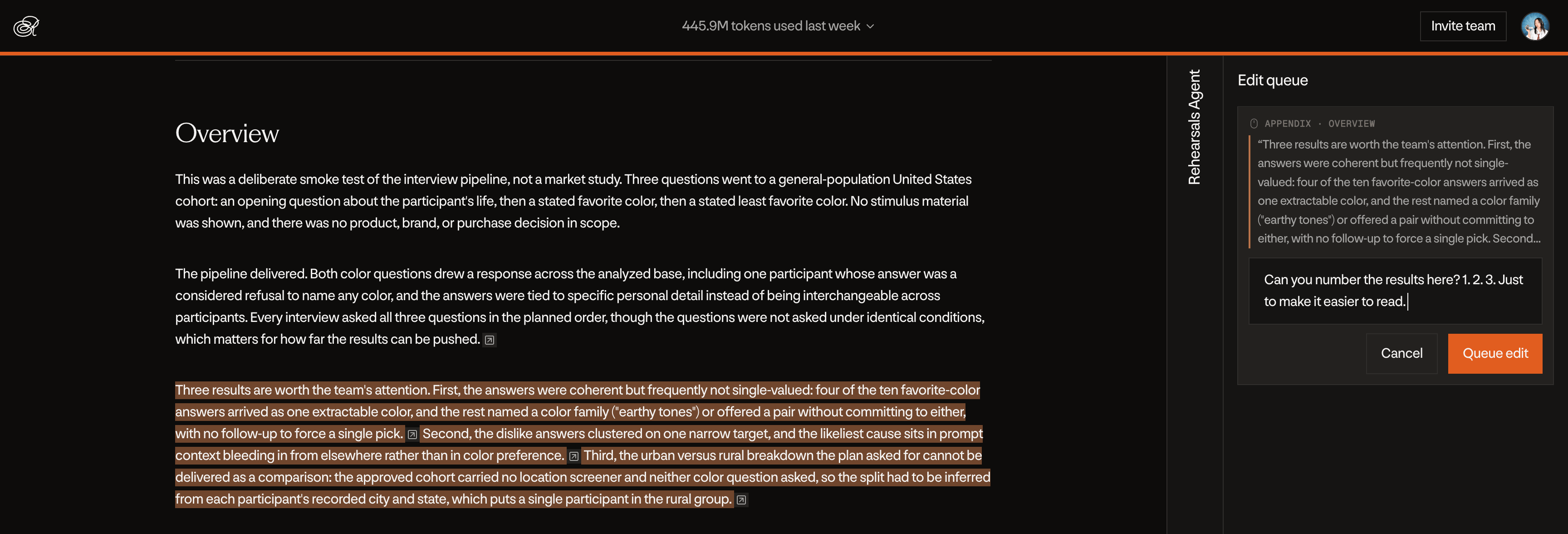
4
Review your queue
Every note you’ve added appears in the Edit queue next to the report, labeled with the section it points at, along with the passage you highlighted. From the queue you can jump back to that section, or press the × to remove an edit you’ve changed your mind about.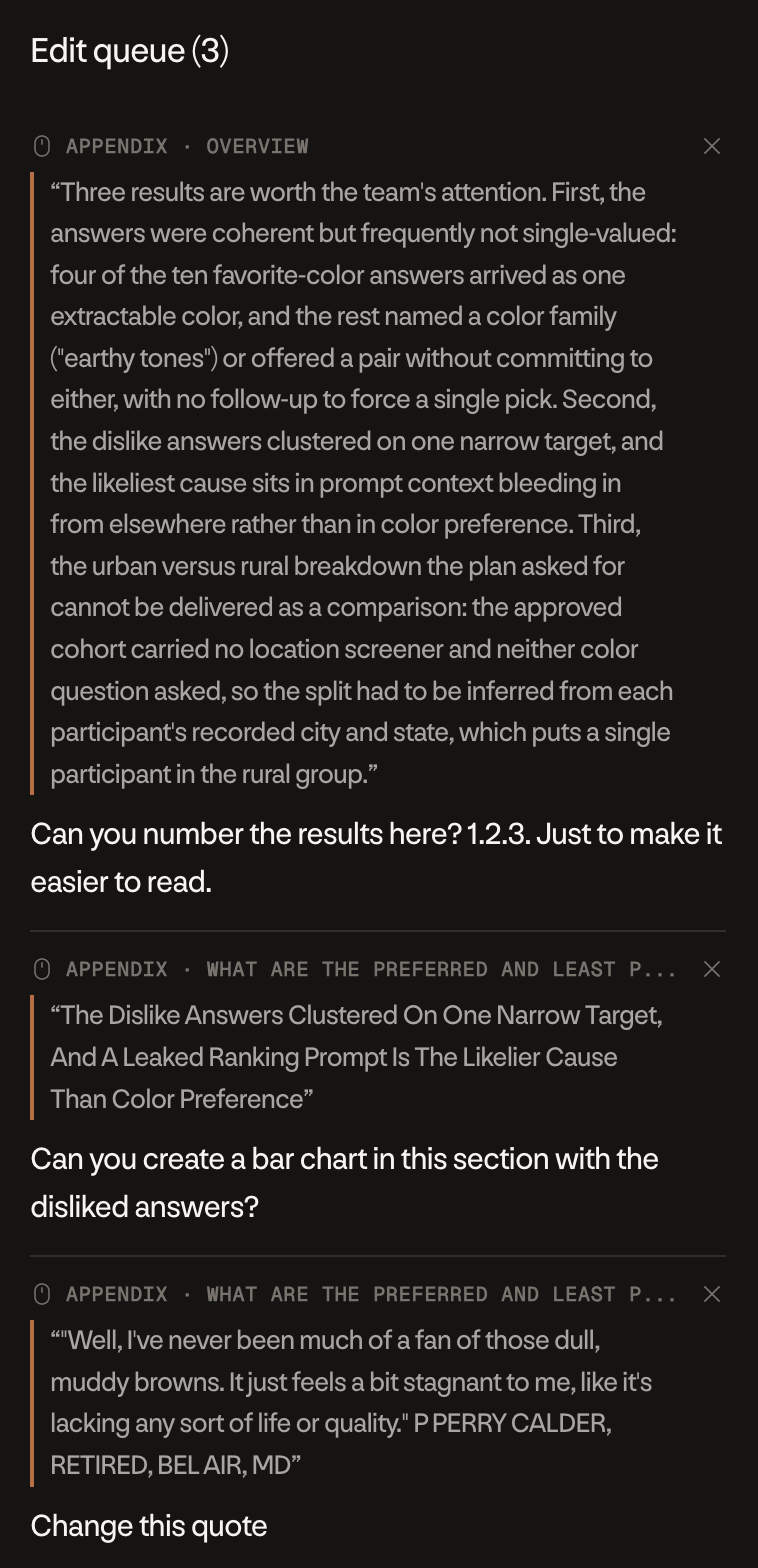
5
Press Generate New Report
The bar at the bottom of the screen tracks how many edits you have queued. Once you’ve made the suggested edits in the Edit queue, make sure to hit the Generate New Report button on the bottom right side. 
Something not working the way you expect? Email support@runrehearsals.com.